

The Old Pond
By Matsuo Basho

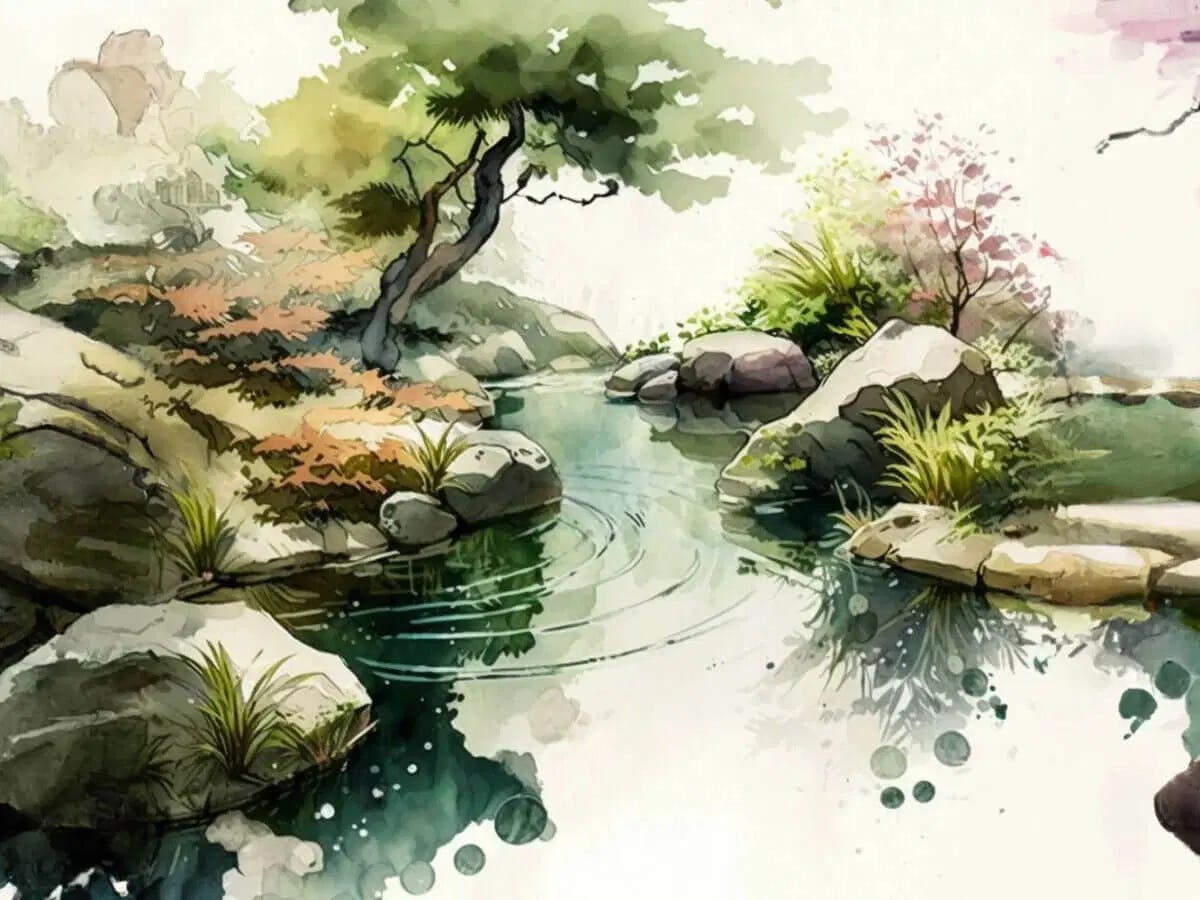
An old silent pond...
A frog jumps into the pond,
splash! Silence again.
-Matsuo Basho (Translated by Allan Watts)
My interpretation:
We’re ending this weeks round of poetry with a simple one. A haiku from a renowned master in the field Matsuo Basho. The haiku is as simple as it is short. In it’s simplicity we can find vast meanings to it. For starters it could represent a physical pond out in the world. Beautiful and natural brimming with life until a frog jumps in. Where did the frog come from? Why is it jumping in? Questions we dont have the answer to and we don’t need them. The frog leaves just as quickly as it jumped in. Leaving behind the splashing sound of water before the pond returns back to its’ natural state of silence and beauty.
If I may go out on a limb, it reminds me of how the passage of time goes. It can be calm and peaceful (the pond in its’ natural state) before suddenly turning chaotic (the frog jumping in and out) as it resets back to normal. Honestly it reminds me of the lake back near my village in Bangladesh. It was always so peaceful and beautiful until my cousins and I would jump in and disrupt everything around us (I can’t swim for reference) before returning back to our rooms. I wonder if the lake is still being disturbed to this day.
A Brief Annotation:
This haiku by Matsuo Bashō is one of the most famous examples of Japanese Zen poetry, encapsulating a profound moment in nature. In just 17 syllables, the poem expresses the quiet beauty of the natural world and reflects the Zen concept of simplicity and the impermanence of life.
I won’t be focusing on the actual annotations right now, mainly because 3 verses might not warrant that from me. Instead I want to bring up some things. Notice how I said this haiku has 17 syllables. How strange that an ancient Japanese poem fits perfectly in having 17 English syllables.
Translating is always tough work no matter the language. Japanese to English is no exception. A haiku follows the structure of 5-7-5. Three lines, the first line having 5 syllables, the second having 7 and the final line having 5. So if you’re wondering how this translation managed to have 17 syllables perfectly, that’s why! It was literally translated in that way.
The literal translation goes something like this:
Fu-ru (old) i-ke (pond) ya,
ka-wa-zu (frog) to-bi-ko-mu (jumping into)
mi-zu (water) no o-to (sound)
So why is a renowned poet breaking conventional rules? Mainly because he can. You see syllables don’t work the same they do in Japanese as they do in English.
In Japanese a syllable has the same concept as something called “on”. A “on” refers to a chunk of sound which is how these haikus are able to work and still be considered following the rules despite the way they sound in English. I cannot do much justice to explain this but please check out the link below which goes into much more depth:
https://www.tofugu.com/japan/haiku/
That is it for me and the first week of Words in Ink! I hope you guys liked the selection of poems this week. Going forward I plan to have themed weeks where I select poems from different authors of the same genre/theme.
What does this old pond remind you of? Does it bring vivid memories of times long past? What was your favorite part of todays post!
Feel free to share, comment and subscribe! It helps me out tremendously!